
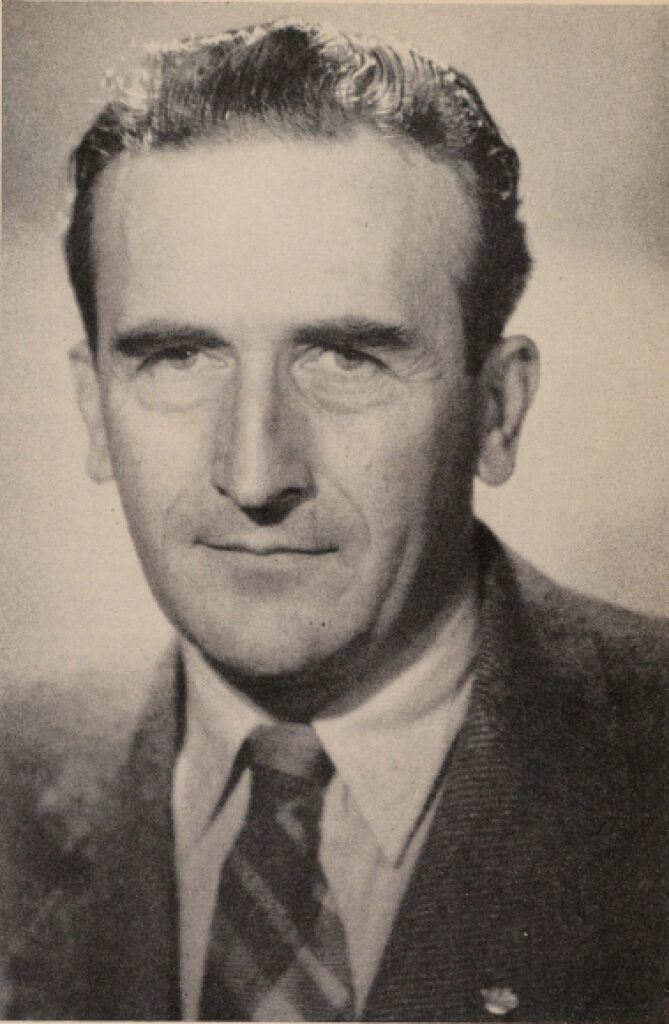
There can be no dispute: Winton Hoch, ASC (1905-1979) – a name forgotten by most – was one of the greatest cinematographers of his time. Consider his career highlights. Back-to-back Academy Award wins for 1948’s Joan of Arc (Victor Fleming) and John Ford’s She Wore a Yellow Ribbon (1949); a shared Oscar with Archie Stout, ASC for Ford’s The Quiet Man(1952); and a continued collaboration with old Pappy on the classics Mister Roberts (1955) and The Searchers (1956). Beyond that, he photographed a wide array of films for a who’s who of Hollywood talents before finishing his career in episodic television during the 1960’s.
But his genius was not limited by the perimeter of the studio lot. Prior to taking up as a cinematographer, Hoch (rhymes with coke) was a physicist graduate of Cal Tech who as an employee of the Technicolor Corporation in 1931 assisted in the perfecting of the three-strip process. In the field of camera design, he created and received a patent for the off-set viewfinder that became standard across the industry; he also worked on the design of an optical printer modification and the manufacture and testing of camera filters. Further accomplishments included the development of methods for the surfacing, cementing and mounting of camera prisms and the testing and calibration of lenses, dyes, lighting units and new emulsions. He also played a major role in establishing standards for incandescent and arc lighting and adapted, designed, tested and built the optical relay system that was used for rear projection. All of this culminated in an Academy Award for Technical Achievement in 1939.
On the pure cinematography side, Hoch collaborated with Ray Rennahan, ASC on Becky Sharp (1935), the first feature shot entirely in Technicolor. He then spent the next three years circling the world while shooting over forty of the popular Jimmy Fitzpatrick Traveltalks; on many of those he also served as director, editor and producer. Returning to Hollywood, he contributed to Gone with the Wind (1939) as well as many of the other Technicolor classics of the era.
From 1943-46 he served in the U.S. Navy and was placed in charge of the Motion Picture Photography Division of the Navy Photographic Science Laboratory in Washington, D.C. In addition to his administrative duties, he developed a method of radar scope photography that met a pressing need of the military. He also designed and supervised the construction and use of equipment for underwater photography and participated in anti-submarine efforts. Higher priorities eventually took him to the U.S. Naval Ordinance Test Station at Inyokern, California, where he refined aerial photographic procedures and developed a system that allowed the collection of data in a way that had previously been impossible. After the war, he was engaged to supervise the shooting of a number of atomic tests in Nevada.
It’s a wonder this man ever had the time to eat!
It’s also a shame that Hoch is not more popularly remembered among the present community of cinematographers. None of us can even approach what he did over his long career. But given all of his accomplishments – which I respect enormously – there is one thing about him that impresses me most of all.
He shot what were perhaps my three favorite childhood TV shows: Voyage to the Bottom of the Sea, Lost in Space and The Time Tunnel. Though I didn’t know it then, I was already getting a taste of his genius!
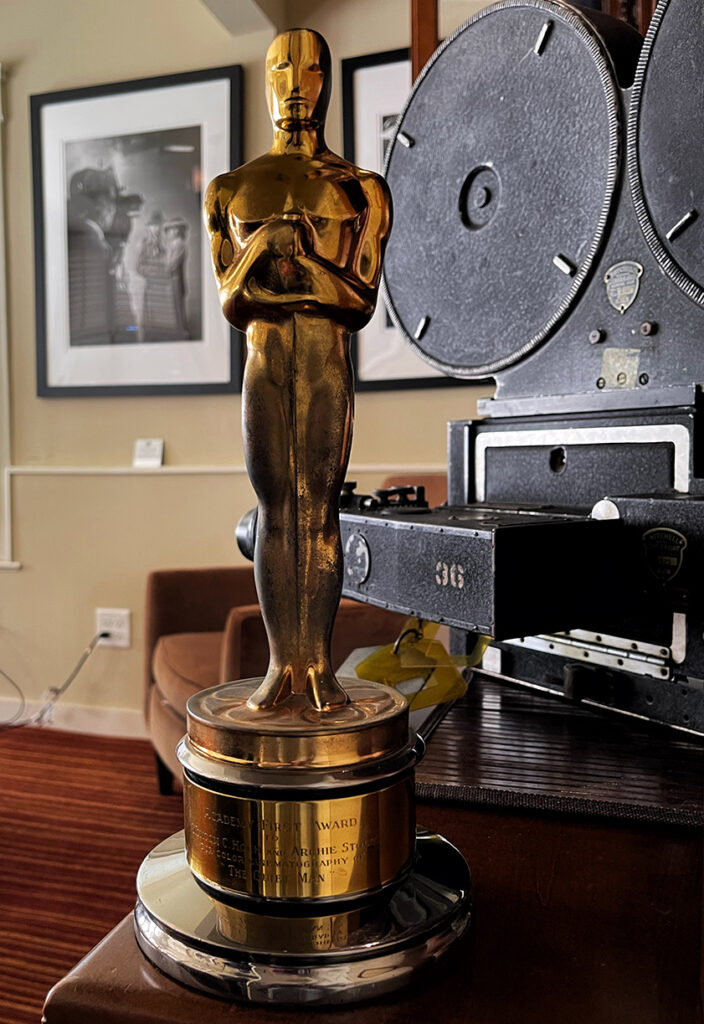
The Oscar Hoch shared with Archie Stout, ASC for ‘The Quiet Man’ is on display at the ASC Clubhouse in Hollywood.
Richard,
I love this post. Wonderful to give tribute to a true pioneer, and it saddens me that his name is not well known, even among those of us who have spent most of our lives following in the footsteps of giants that we have already forgotten. While it’s wonderful that his work lives on, it would be great if more was done to keep the names of the greats alive in our collective memory.
Richard –
Such a wonderful post with delightful education… Thank you… ♥️
Thank you Richard! This is a terrific heads up about such a legendary cinematographer who cleared the path for so many of us to follow. I am grateful for all of your wise illustrations of our cinematography ancestors!
Thanks for this article, Richard — every cinematography student should know his name! Talk about an overachiever!