
Mirage (1965; Edward Dmtryk) is a fair-to-middling, Hitchcock-like thriller starring Gregory Peck and Diane Baker. It’s worth your time if you happen to catch it on TCM, as I did a week or two ago.
The film’s cinematographer, Joe MacDonald, ASC (1906-1968), was one of the greats of old Hollywood. Among his many credits are My Darling Clementine (1946; John Ford), Call Northside 777 (1948; Henry Hathaway), Viva Zapata (1952; Elia Kazan), Pickup on South Street (1953; Sam Fuller) and How to Marry a Millionaire (1953; Jean Negulescu). He was nominated for an Academy Award on three occasions: The Young Lions (1958; Edward Dmtryk), Pepe (1960; George Sidney) and The Sand Pebbles (1966; Robert Wise). In addition to his beautiful color work, he was a master of black and white photography and often used high-contrast effects to bring depth and mystery to his images. The opening sequence of Mirage – in which a flashlight serves as his main source – is perhaps his best example of that approach.
There’s no question that MacDonald was an important influence on Conrad Hall, ASC, who would use a similar method to deliver a graphically powerful look for Richard Brooks’ 1967 hit, In Cold Blood.
Check out the screen grabs below to see what I mean…
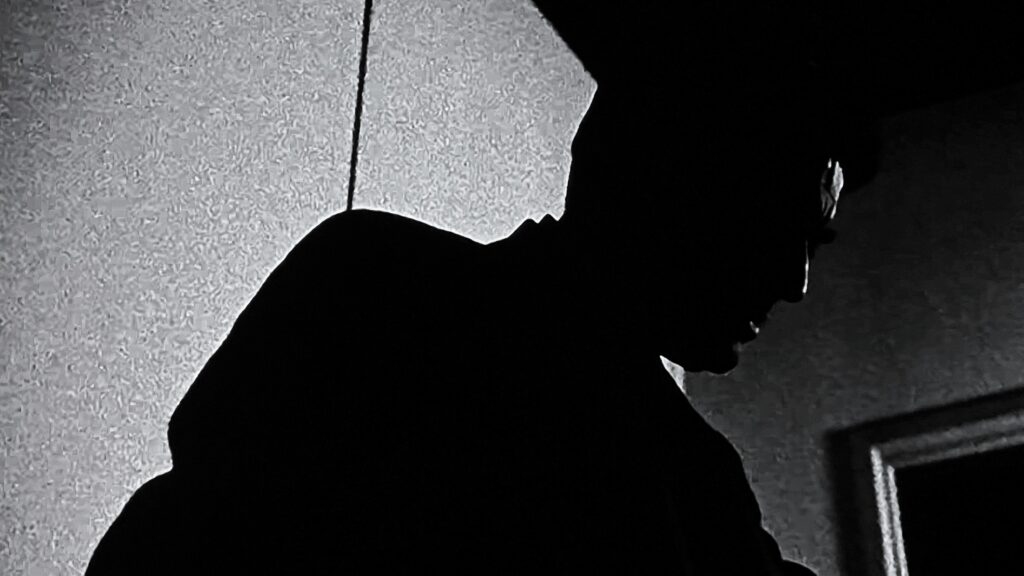
Mirage 1…
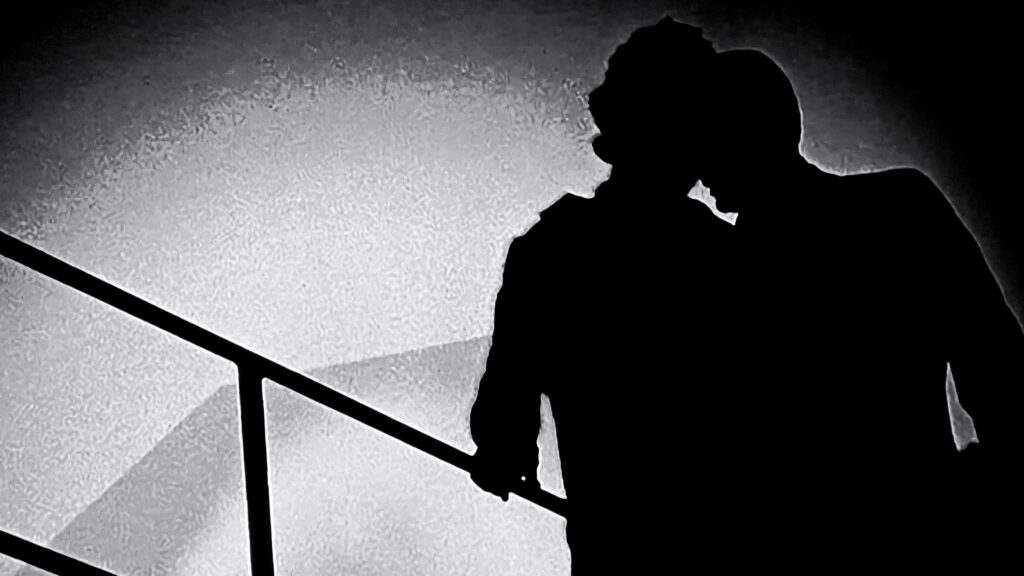
Mirage 2…
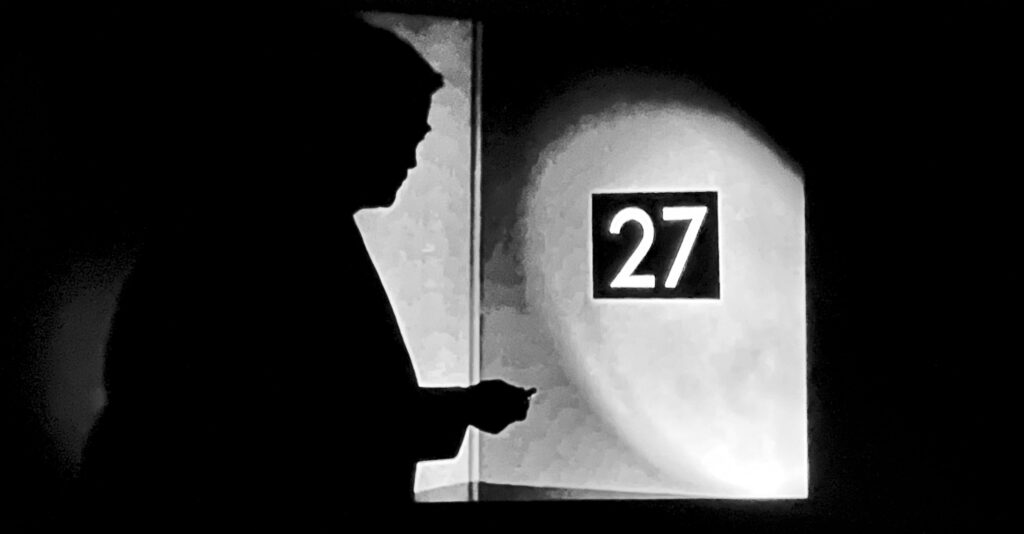
Mirage 3…
Conrad Hall, ASC took it to another level in 2.39 aspect ratio…
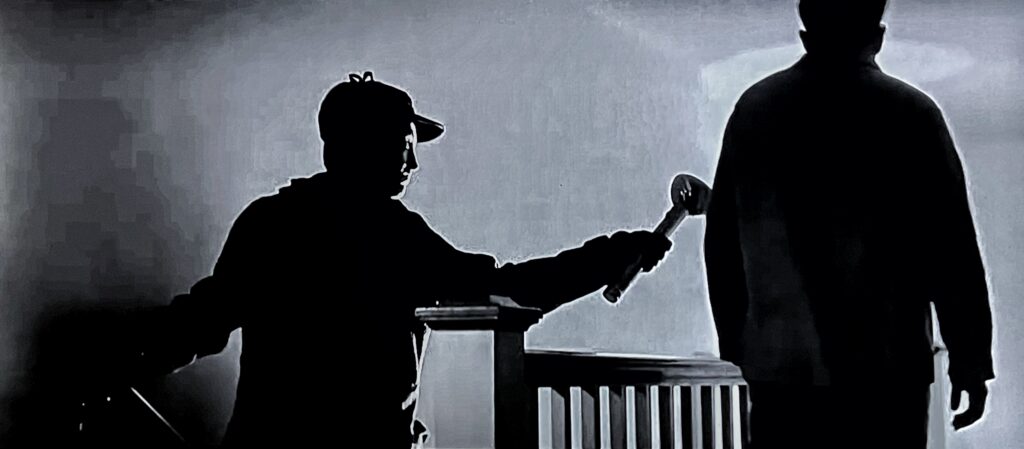
In Cold Blood 1…
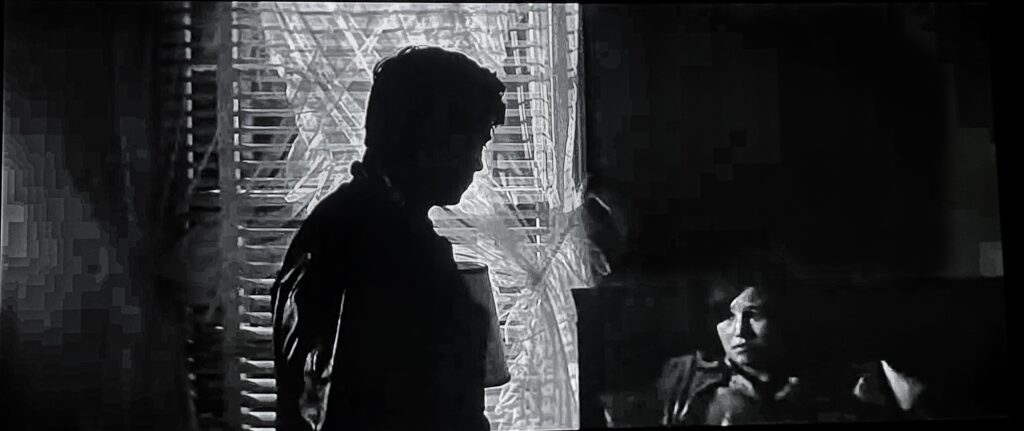
In Cold Blood 2…
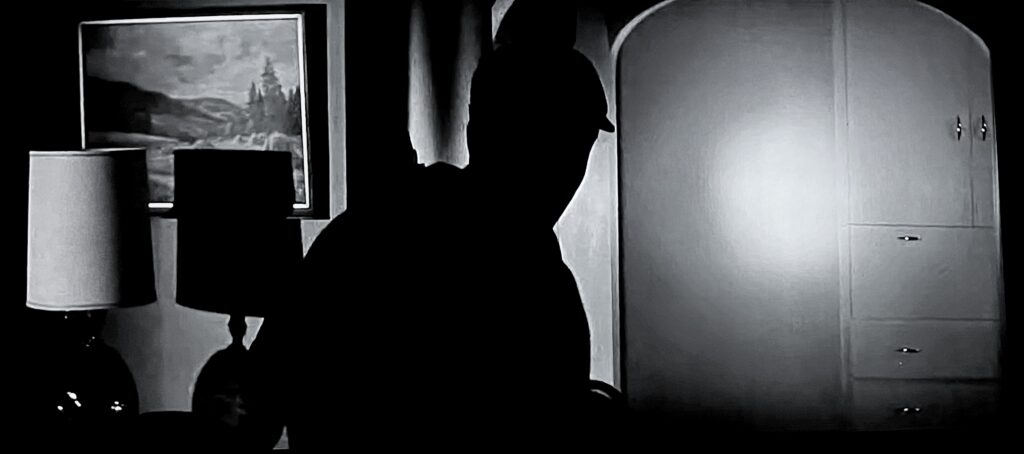
In Cold Blood 3…
Great post, I’ll have to check out “Mirage” — a few years ago I saw his work in the western “Yellow Sky” which holds some sort of record I think for the amount of day-for-night shot on b&w infrared film. It’s wonderful. I also saw “The Sand Pebbles” for the first time recently and his high-contrast lighting in color is lovely.
Great examples of parallel styles and evocative images.