
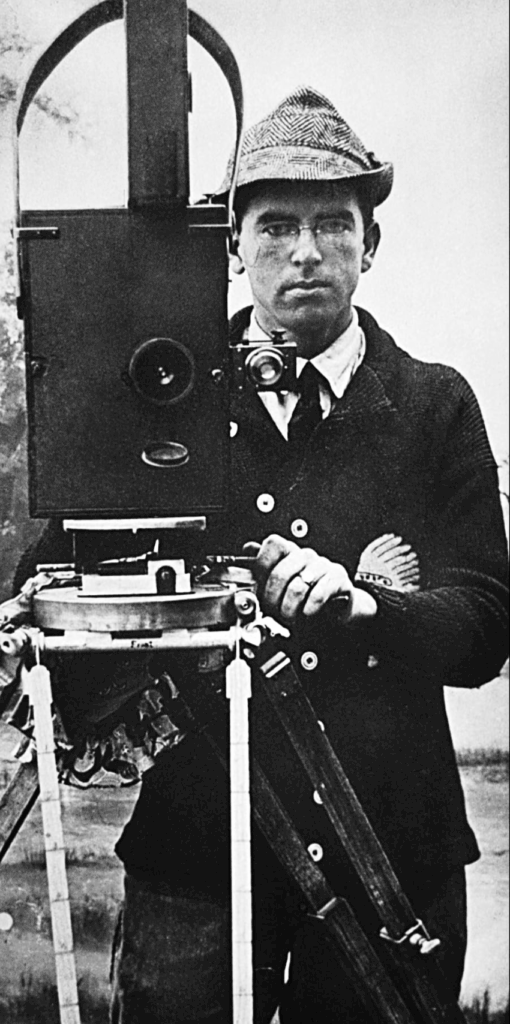
Some interesting facts about this largely forgotten genius of the camera:
He came to prominence in an unorthodox way. Having never worked as an assistant or in any other crew position, he simply bought a camera and called himself a cinematographer (so, there is a precedent for what’s going on today!).
He was the first to shoot panchromatic film on a major feature, Janice Meredith (1924; E. Mason Hopper; additional uncredited photography by George Barnes, ASC).
And he preferred shooting low-budget, ten-day features to million-dollar productions. His observations sound sensible to modern ears:
“What I like…is the fact that every detail of production has been ironed out in advance. There is no rewriting of the script from day to day; no changing of the story when half-way through the production. The picture is practically cut before it is shot. Nothing is left to chance and they hire a Director of Photography whom they have confidence in, and then let him assume the responsibility of photographing the picture without trying to tell him how to do his work.”
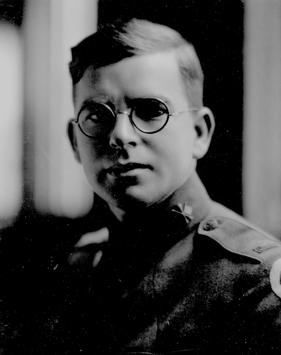
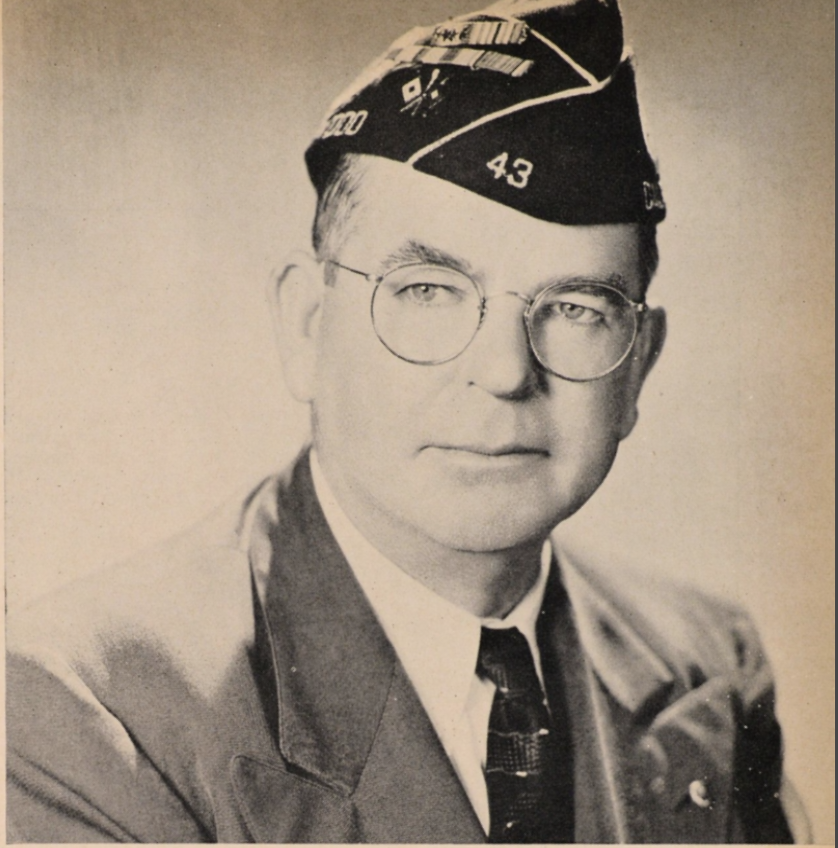
Born in Fort Ross, California on April 2, 1889, young Morgan migrated to San Francisco where he studied Electrical Engineering. Upon graduation, he worked briefly as a cable inspector for Western Electric, then took a job repairing movie projectors in Chicago. By 1911, he was shooting newsreels for Gaumont and Pathe. After moving to Hollywood in 1914, he continued on this path until the outbreak of World War One; commissioned a Lieutenant in the Army Signal Corps, he spent the next year photographing the hostilities in Europe.
Returning home, he teamed up with director King Vidor in 1919 for six highly-touted films starring the future consort of William Randolph Hearst, Marion Davies. Over the following decades, he worked for a wide range of studios – Columbia, Cosmopolitan, MGM, Monogram, Paramount, Universal and Warner Bros. Perhaps his best-known work is Charlie Chaplin’s Modern Times (1936), on which he collaborated with former Essanay colleague, Roland Totheroh, ASC. While never an Oscar nominee or winner, Morgan was a solid cameraman who always got the job done in an appropriate and competent style. Nonetheless, the Federal Security Agency of the U.S. Office of Education saw fit to give him a special citation for his photography of a film showing everything a machinist does in building a ship.
In addition to shooting some two-hundred-one features, he finished his career in television as a staff cameraman at Screen Gems, where he photographed the series, The Adventures of Rin Tin Tin. Retiring in 1956, Ira Harry Morgan passed away in San Rafael, CA on April 10, 1959. He was survived by his wife, Rena (nee Carlton).
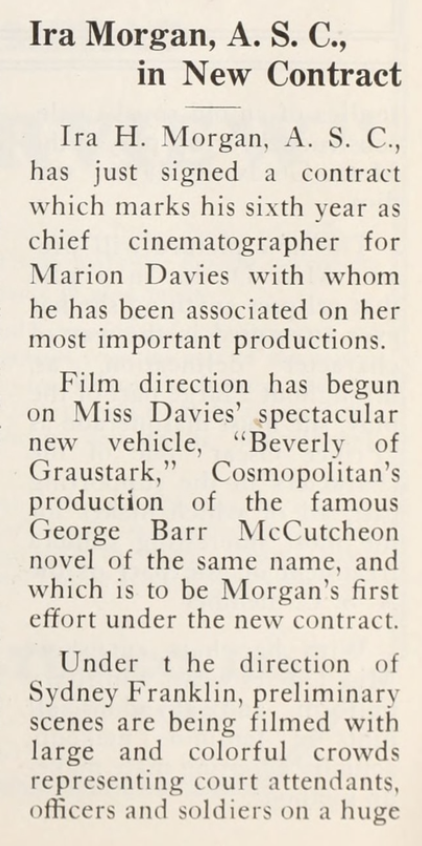
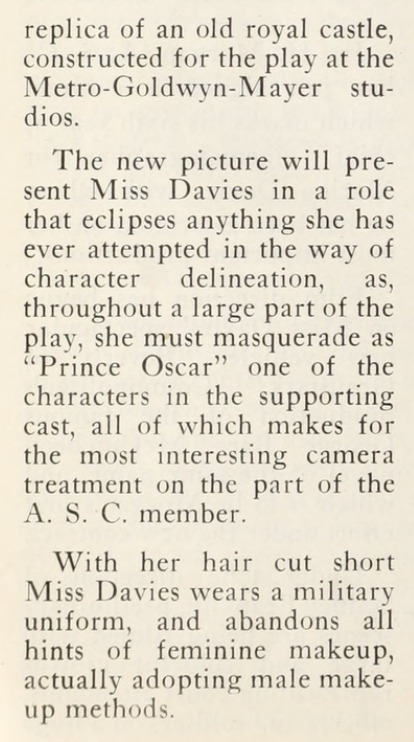
American Cinematographer, December 1925
Thanks, Rich. I love these stories about the pioneers.
Greg – Thank you…they’re fun to research.
Great story. Not all of us started as AC’s or even operators and too many (IMHO) today are doing the same. But now it’s different -buy a digital camera and you see the image n the monitor. No learning about exposure ratios and the rest. But I really wish what you quoted him saying about independent low budget productions was still true today. Now it seems that everyone tells us how to do our job and what tools to use.
It’s a different world out here now in every way.
Roberto – You are so right! When I first started out (and I suppose for you, too), I’d hear the old-timers talking about how things had changed in the business. To me, it all seemed normal because I never knew any different. Now, I understand precisely what they were driving at. What a shame!
Love these profiles, Richard – thank yiu!
I am a great-great niece to Ira Morgan. Ira’s sister Ethel Morgan Baker was my great-grandmother and she died in the 1920s. My dad would take us kids to visit Uncle Ira in his Hollywood Hills home. After Ira’s death my dad inherited his a trunk full of personal and professional items. One correction: his wife Rena Carlton predeceased him in 1956 and they are buried next to each other at Hollywood Forever cemetery.
Suzanne – Thank you for the response and correction. Your great uncle was an amazing cinematographer and he has not been forgotten!