
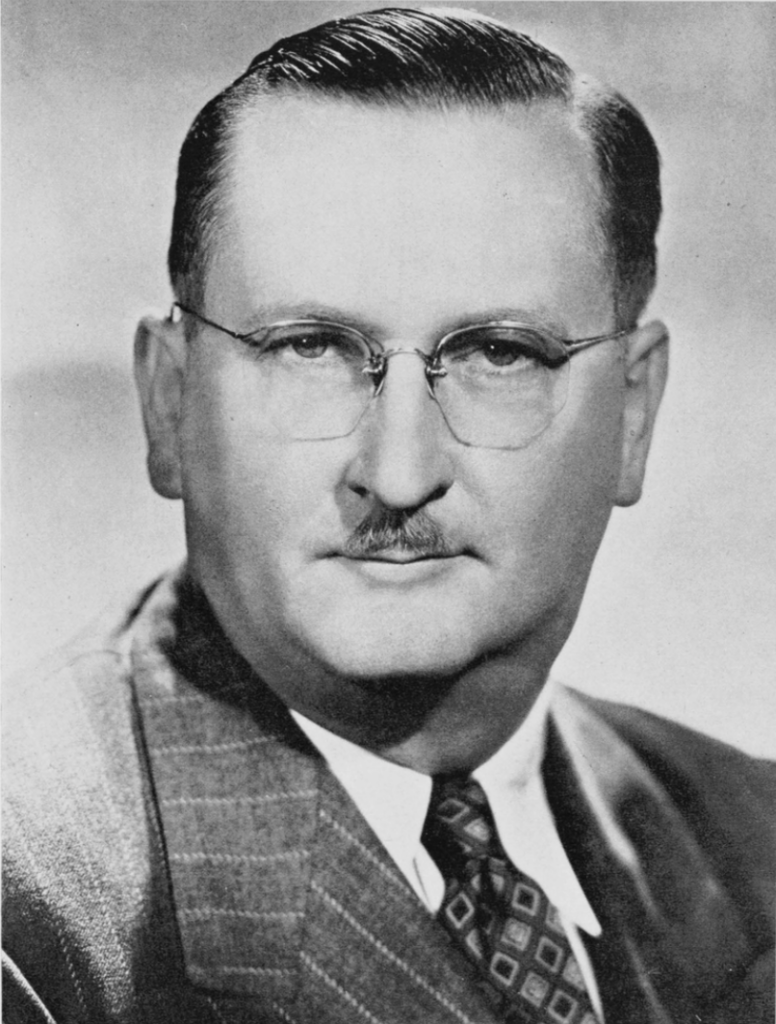
Rolla Flora… Now there’s a name for you, but don’t make too much fun of it. He was a heavyweight player by any standard, from the ’20’s through the ’60’s.
According to the November 1941 issue of American Cinematographer, Rolla Theodore Flora was born in The Dalles, Oregon in 1902. Other sources note his provenance as being Story County, Iowa.
Either way, he started his career developing drugstore snapshots taken by his fellow townies. Decamping for Hollywood in 1921, he secured a job as a lab assistant at Famous Players-Lasky. Lacking formal education, Flora was a life-long auto-didact. Soon, he was promoted to still photographer, then assistant cameraman. His inventiveness and industrious determination brought encouragement from pioneering special effects man Roy Pomeroy, who gave him a chance in trick photography during 1923.
His first assignment was Cecil B. deMille’s The Ten Commandments (1923), which included the famous parting of the Red Sea. His success in collaboration with Pomeroy then led to the development of a camera that could record two identical negatives at the same time for the purpose of optically printing people on previously filmed backgrounds. Flora also helped in the early invention of the Pomeroy Process, which exposed a blue transparency image in front of the negative as the actors were photographed against a red background. Further achievements included designing and building Paramount’s first optical printer and inventing a cap used on film magazines to trap dust and debris.
After moving to 20th Century Fox in 1928, his career really picked up steam. One of his most spectacular effects was seen in 1942’s Footlight Serenade (Gregory Ratoff\Lee Garmes, ASC) in which split-screen and composite effects enabled Betty Grable to dance and box with her own immense shadow, then step away to conclude the number beside herself. For Earthbound (1940; Irving Pichel\Lucien Andriot, ASC), he invented a device that allowed for the simultaneous shooting of ghost images. For the first time, this allowed for panning and dollying, and made it unnecessary for the actor playing the ghost to transpose action intended for his right hand to his left hand, and vice versa. He also played a key role in the development of the zoom lens. Flora’s expertise was so well regarded, Fox designated him the studio’s “Director of Montages and Optical Effects.”
Though he worked mostly without screen credit through his career, he is known to have contributed to hundreds of productions.
Flora was married to the former Randy Hegge and passed away in Kauai, Hawaii in 1965. Both are interred at Grand View Memorial Park in Glendale, CA.
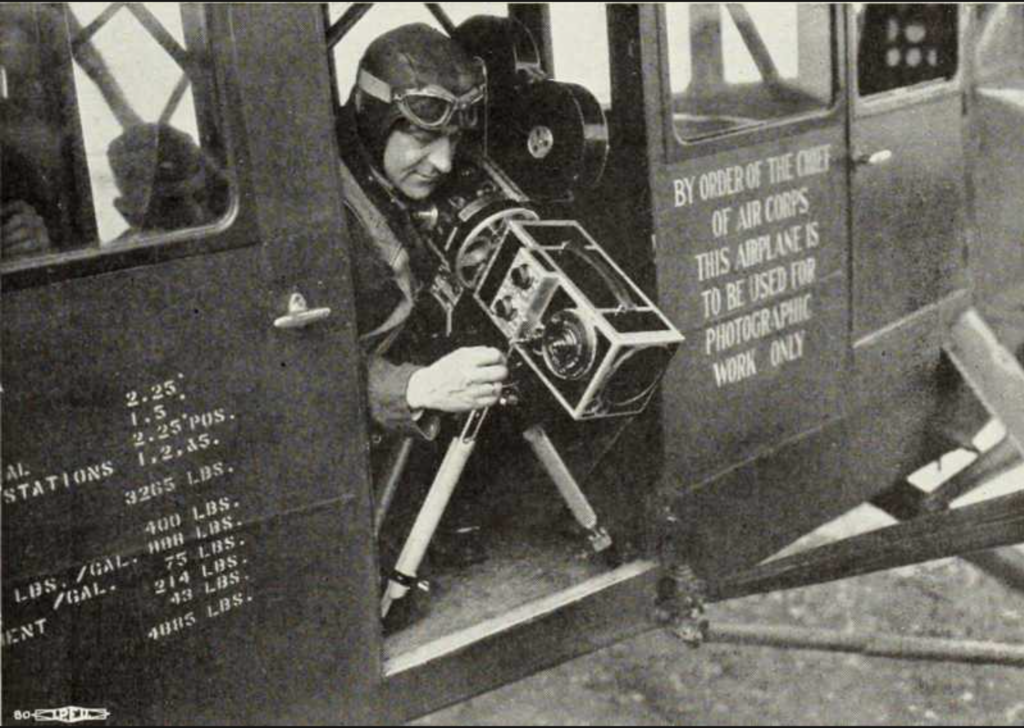
Flora preparing for some aerial shooting…