
Prior to the arrival of reflex viewing systems, cinematographers and camera operators were forced to frame and execute their shots with an offset viewfinder. While this device might seem cumbersome today, in its time it was considered quite sophisticated. Mounted to the left side of the camera, its metal housing contained low-grade optics that provided only one perspective of what the operator could see. The difference in field sizes photographed by various focal lengths was compensated for by matching mattes that were inserted through a slot cut in the top.
As the offset finder’s position was completely independent of the film plane, it was connected to the focus assembly by a series of cams that calibrated its movement to match the parallax between the taking lens and the position of the finder. If the wrong matte was used – a not uncommon error, I’ve been told – the shot would have been seriously mis-composed and unusable in the movie.
A great deal of experience was required to use the offset finder properly. An element of Kentucky windage apparently played into the execution of each shot, since the operator had to know just where to place a frame line in order to get the composition right. Trust had to have been a valued commodity in the old days. In many cases, especially when the camera was moving, this meant that at some point he’d be looking at a completely off-kilter frame. The operator had the final say about whether or not a shot worked as planned – and there was no way to verify his contention until the next day in dailies.
Fortunately, that’s no longer the case. We take the ease and precision of reflex viewing for granted. Along with video assist, it has taken much of the pressure off the operator’s shoulders. But as you look at any movie shot prior to say, the early ’70’s, pay special attention to the framing and the consistently outstanding work done with this clever little tool.
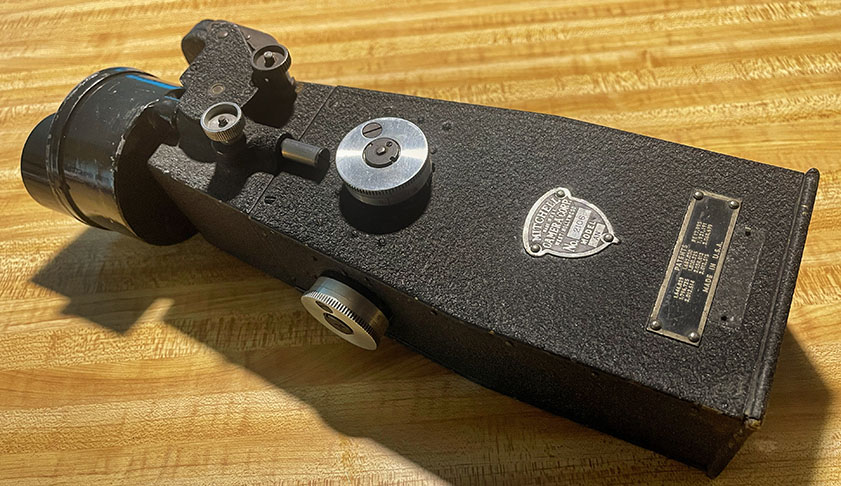
A later-model offset viewfinder, made by the Mitchell Camera Corporation.
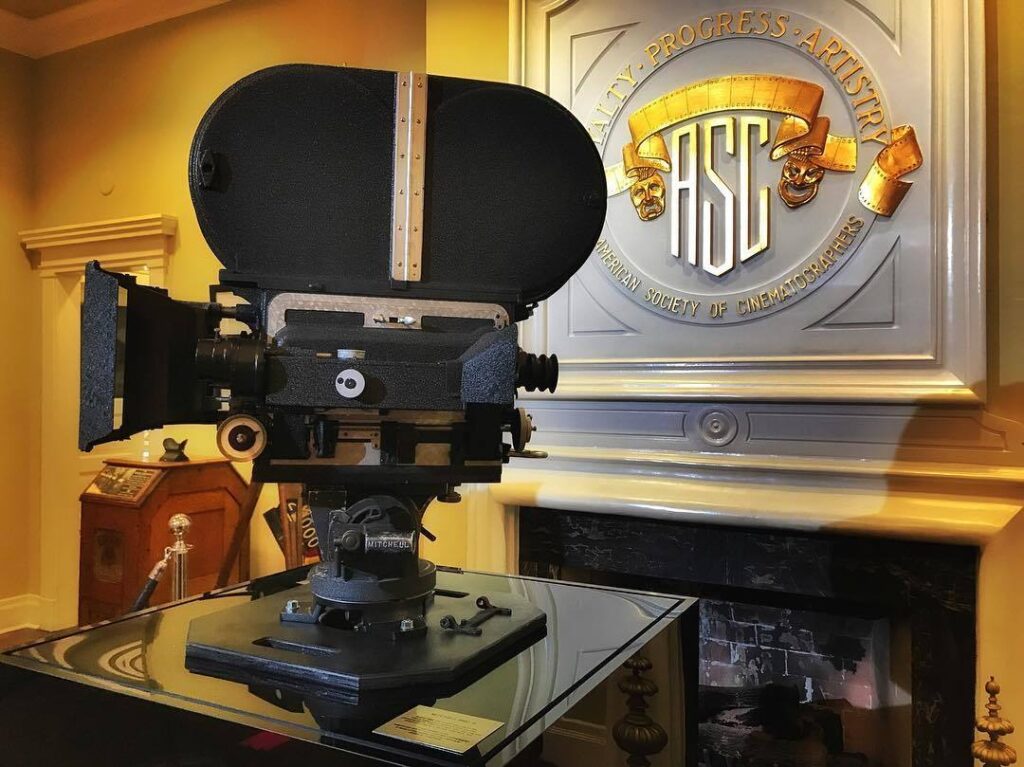
This offset viewfinder is attached to the Mitchell BNC camera used by Gregg Toland, ASC to photograph Citizen Kane (1941; Orson Welles) and many other classics.
I love seeing “golden years” BTS stills of the Director and DOP/CamOp using it off of the main camera to find compositions and plan shots. A great tool indeed!
“Kentucky windage” – I learned a new term today. Thanks, Richard!
David – It’s an old shooting term. Basically refers to correcting a deviation by aiming away from the bullseye so as to hit it squarely.