
I heard this sentiment echoed in so many ways during my early years as an assistant cameraman that it’s a miracle I didn’t throw in the towel and get a job digging ditches. One veteran crewmember went so far as to fire this pearl of wisdom at me: “Kid, you wanting to work in film right now is like wanting to be a blacksmith when the automobile was invented.” I was fond of the guy, so I just grinned and nodded. But on the inside, I was giving him the middle finger.
It’s a good thing too, because in 2023 I’m continuing to enjoy a magnificent career doing something I love. I have no hard feelings toward that grizzled old-timer. He was a product of his era and the notion that videotape would eventually replace photochemical processes had been in the air since the ’30’s. Today, he’d probably be surprised the situation has turned out so well for cinematographers. Digital technology – video’s superior successor – has made us the beneficiaries of more creative options than anyone could have anticipated.
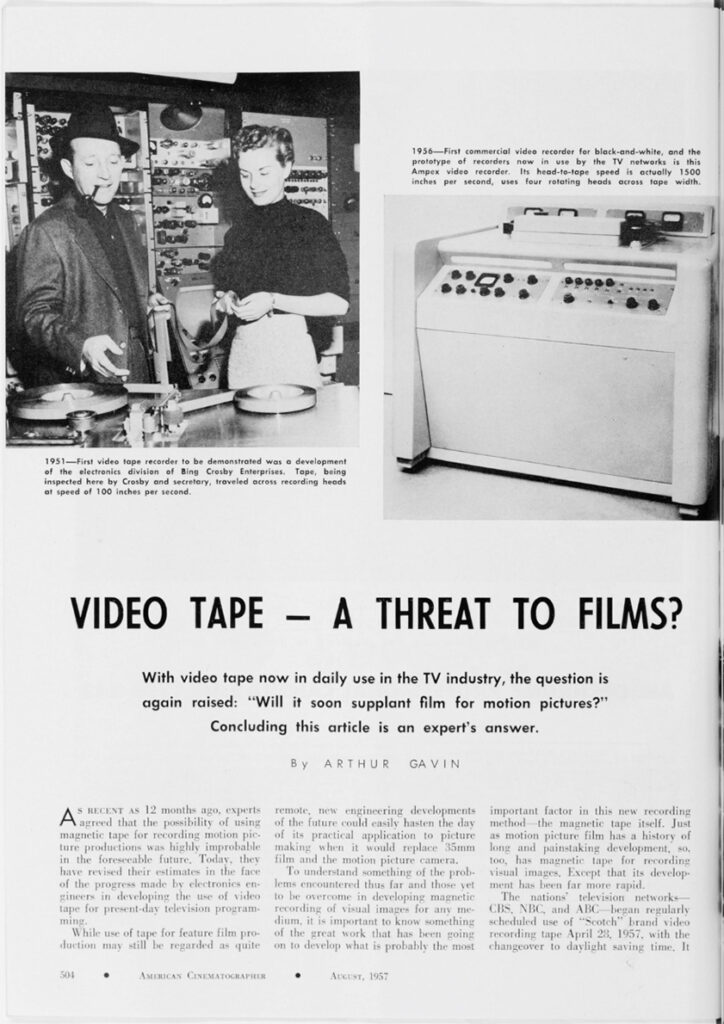
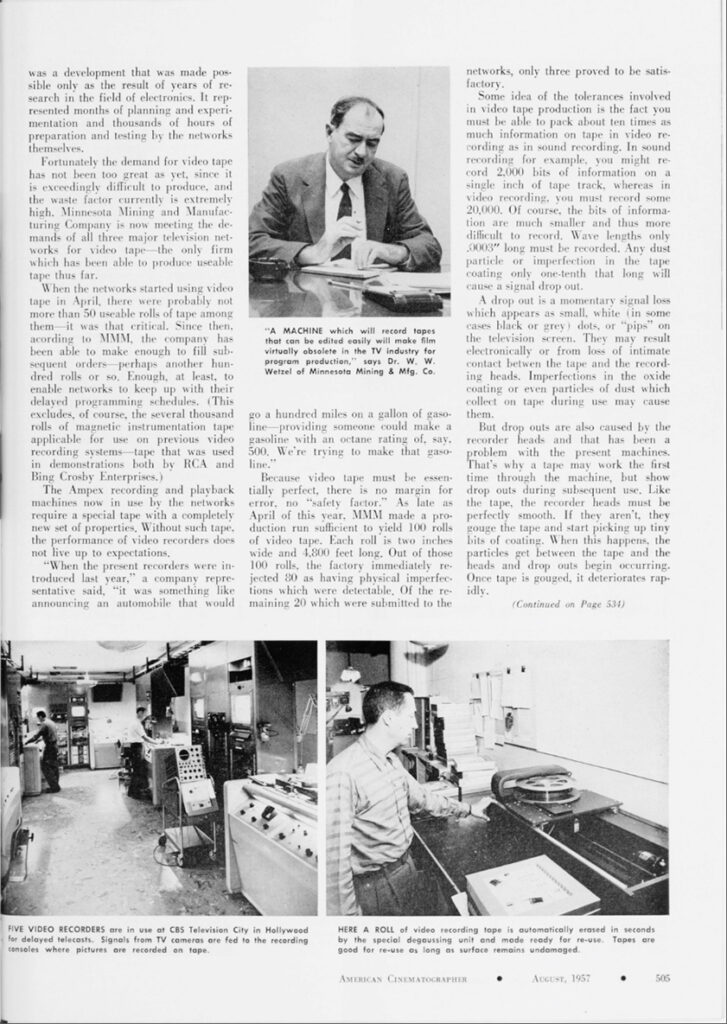
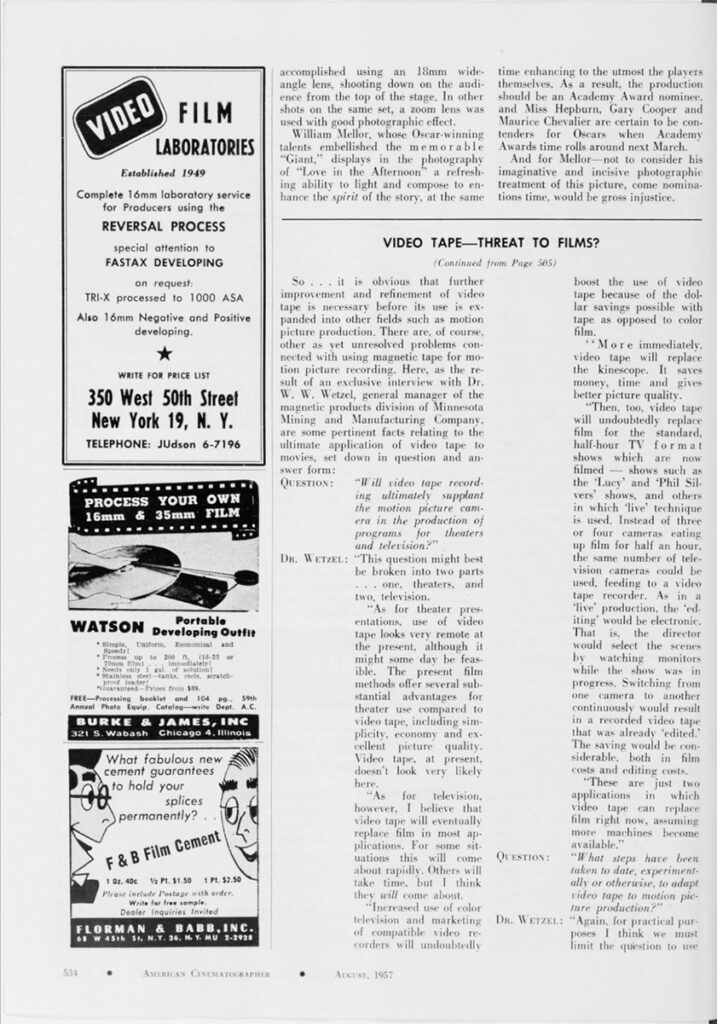
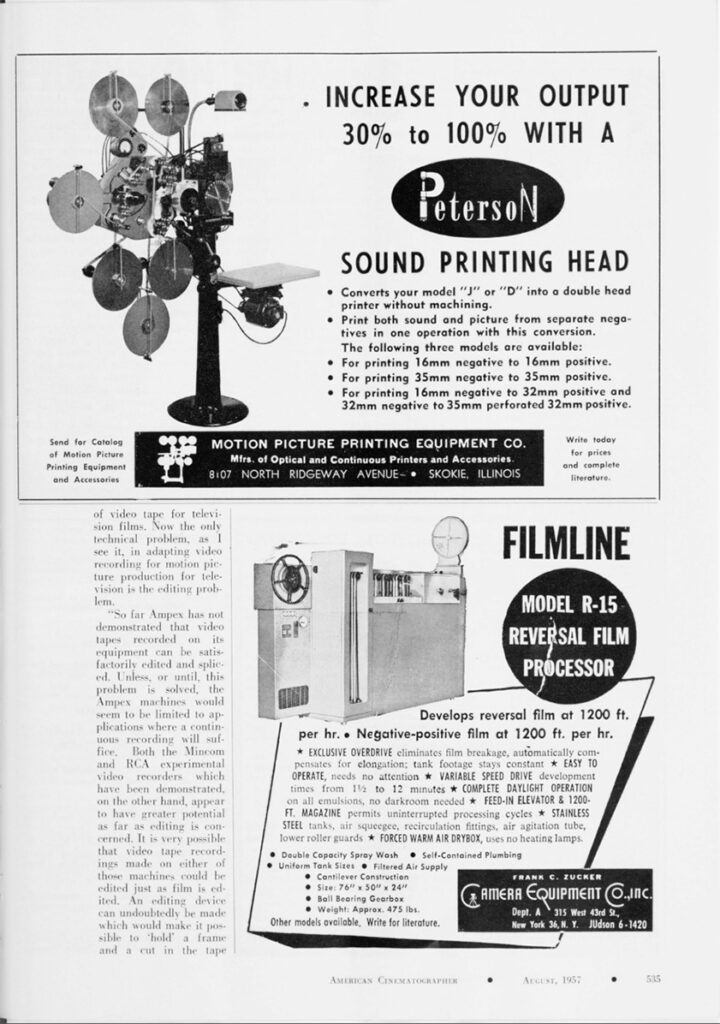
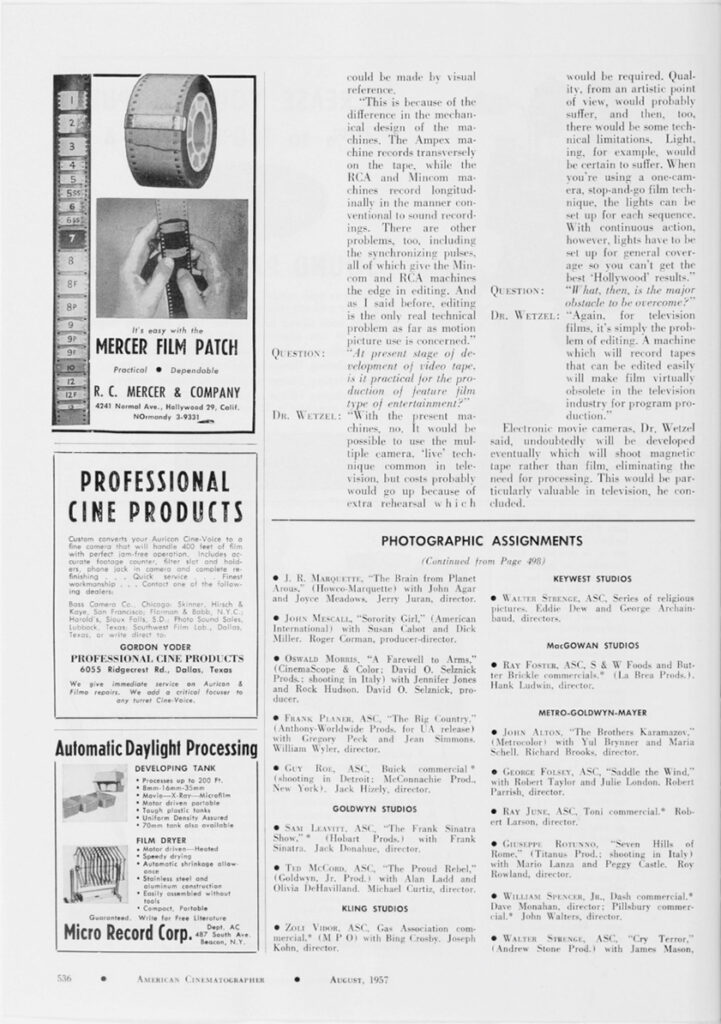
For greater perspective, have a look at this article lifted from the August 1957 issue of American Cinematographer. With the distance of time, it reminds us that the argument – which still rages among the poorly informed – has never been about film vs. electronics. It has always been about good taste vs. bad taste. Regardless of what medium we might use, talented artists and craftspeople will deliver the best images they’re capable of rendering.
Love this one Richard. “good taste vs. bad taste” right on Sir.
There was a whole issue of American Cinematographer (October 1972 I think) that resurrected that “film is dead” theme… Seemed to come up once every fifteen years. I recall arguing online with a director in 2000 when the Sony F900 came out, who had started a “film is dead” website. He argued film would be replaced by digital within five years — I suggested it would be more like fifteen years and even then, film would still exist for those who wanted it. Of course, making predictions is a fool’s game and for the most part, pointless (unless you are thinking of investing your fortune behind some new technology.). We all have to deal with the options in front of us — though it is always good to consider some mid and long-term issues resulting from our choices. On a side note, imagine being those cinematographers of the 1950s dealing with 3D, CinemaScope, etc. who had started out in the early Silent Era…
This is why AI is freaking me out. Until now it was a different medium, but there was always a person behind the camera. These new technologies might make human operations obsolete and that’s scary. Film, digital, tape… there was always a real hand moving all the pieces, but soon there would be a perfect algorithm that never misses the frame, gets the perfect focus, created the perfect lighting. When you lose the human error and everything becomes perfect, you lose the very thing that makes art what it is: an emotional journey both for the creator and the receiver.
David – As I always say, change has been the only constant part of cinematography since the first turn of the crank on Edison’s prototype camera…
Luigi – Every time a new technology has come along, people have predicted the end of cinematography. In truth, it was the opposite that occurred. We can’t control what’s going to happen with AI, but we can control our response to it. I prefer to be optimistic and believe it will enable us to do things we haven’t conceived of yet…
Thank you, Chris…! No matter how you peel what we do, that’s always the bottom line!
I still remember the 1997 headline from The Onion: “High-Definition Television Promises Sharper Crap” with the line: “big-budget movies will soon be available in HDTV, which manufacturers promise will offer an experience comparable to shaking your head and thinking, “This sucks,” in an actual movie theater.”
David – That’s not the only prediction they were spot-on about…!
For independent documentary filmmakers, digital technology has been a career saver. I shot my first documentary 1983 on 16mm film and went broke doing it. That project languished in its many many boxes for years. I vowed never again and went back to being a photojournalist. In 2000 I was lured back in by Dirck Halstead’s Platypus Workshops, in which he taught still photographers to be digital filmmakers. Because of digital technology I was able to complete my 1983 film, al be it 32 years later.
And a terrific film it is, John! You need to get it out to the world…
Wilmer Cable Butler (April 7, 1921 – April 5, 2023)
https://en.wikipedia.org/wiki/Bill_Butler_(cinematographer)
“Raid on Entebbe” TV movie photographed in video by Bill Butler, ASC
I read somewhere, perhaps in American Cinematographer, that when Bill Butler was asked how it was to film the movie using video, he replied (I paraphrase) that he had access to the best $100,000 light meter ever made.
Ha! That sounds exactly like him. Bill had been a video engineer long before he became a feature cinematographer. I’m sure he knew exactly what he was doing with those lousy electronic cameras of the time…