
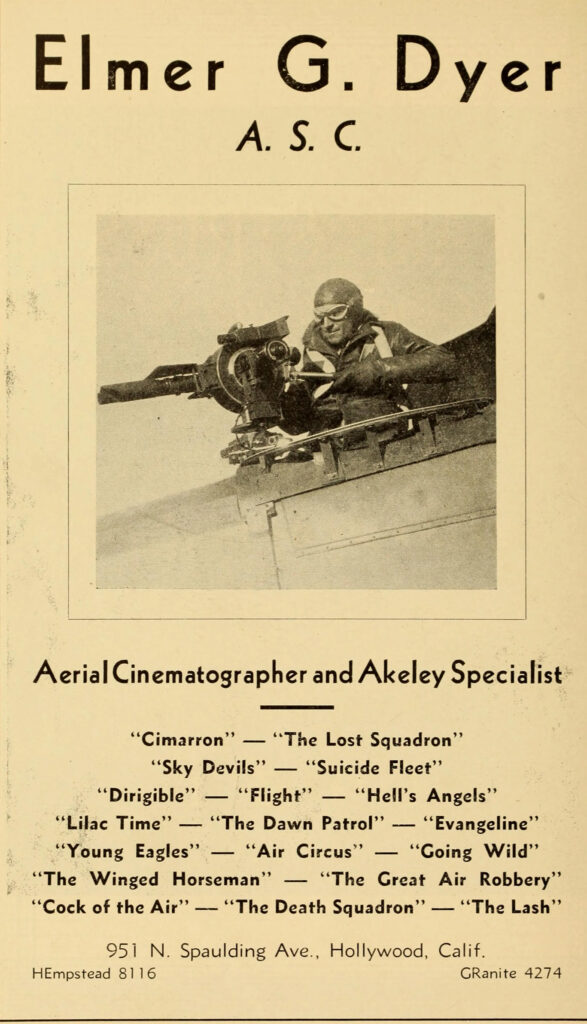
We’ve long taken aerial cinematography for granted, but ninety years before Top Gun: Maverick ruled the skies, a daredevil cameraman took to the air in order to bring his own breathtaking images to moviegoers around the world. As the first to specialize in that sort of work, Elmer Dyer, ASC was a pioneer in the truest sense. Though his memory has been lost to the ages for the most part, the standard he set remains impressive.
Born in Lawrence, Kansas, his family re-located to Los Angeles in 1906. After entering the film business in 1912, he soon became a busy a newsreel shooter for such companies as Paramount-Bray Pictorials, Universal Weekly and Gaumont. Dyer attempted to enlist in the military during WW I, but was turned away due to being a family man. He then threw himself into his work for the next few years, picking up co-cinematographer credits on a number of B-westerns shot for Nat Spitzer. The Whitman Bennett Studio then sent him to Alaska, where he remained on The Iron Trail (1921; Roy William Neill) for seven months. Upon his return to Hollywood, he joined Fox Studios, where he photographed the Van Bibber series; he then worked for Universal, shooting films starring Arthur Lake and Slim Summerville. While there in 1927, the need arose for some special scenes made in the air. Fond of using an Akeley camera, Dyer answered the call and a specialty career was born.
From there, it was all aerial photography, starting a forty-feature run with some amazing work in Frank Capra’s Flight (1929). Dyer followed that up with the greatest aerial film of its day, Hells Angels (1930), directed by Howard Hughes. Even by current standards, the production was a bloated, out-of-control mess, but Dyer set the standard by capturing a number of incredible dogfighting sequences. Subsequent flight-heavy films included The Dawn Patrol (1930; Howard Hawks), Dirigible (1931; Frank Capra), Night Flight (1932; Clarence Brown), The Lost Squadron (1932; George Archainbaud)), Lost Horizon (1937; Frank Capra), Only Angels Have Wings (1939; Howard Hawks), The Flying Deuces (1939; A. Edward Sutherland), Captains of the Clouds (1942; Michael Curtiz) and Wake Island (1942; John Farrow).
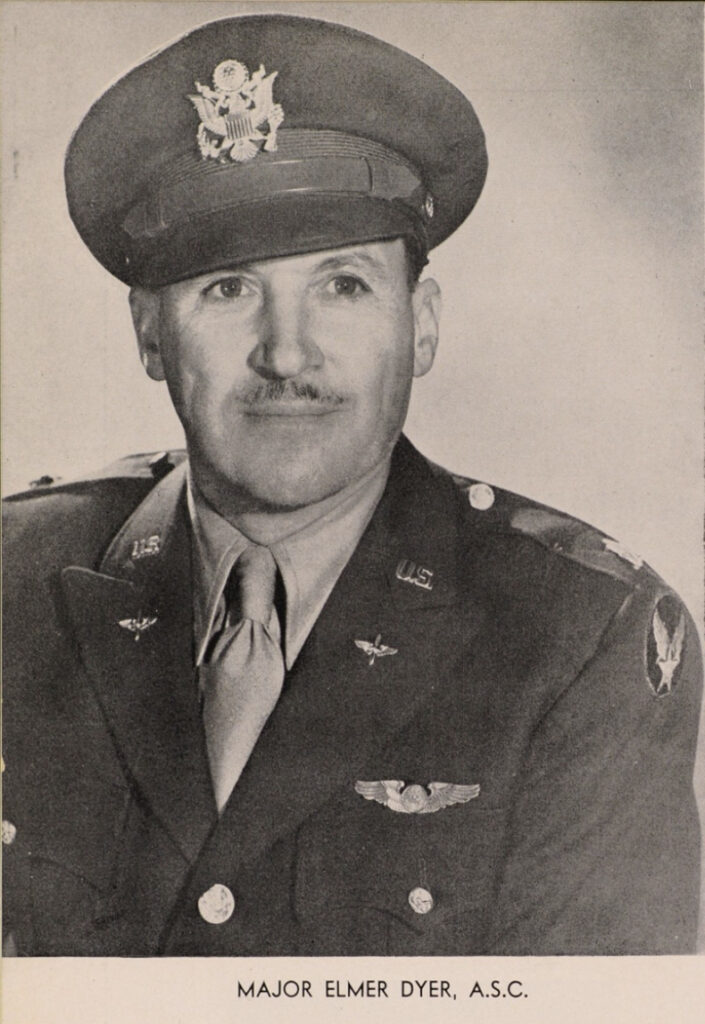
Twenty-five years after his rejection for military service, the Army’s First Motion Picture Unit had no such hesitation in welcoming Dyer to their ranks during WW II. Commissioned a Major, he served overseas for three years, shooting aerial footage for training films. Back home, he continued his long-time collaboration with legendary stunt pilot Paul Mantz. Dyer also shared a 1943 Oscar nomination with James Wong Howe, ASC for Air Force.
In 1950, he retired from features and created his own stock-shot library. To service the new enterprise, he built a custom laboratory and maintained a $20,000 inventory of cameras and lenses. Dyer also kept a talking parrot at his studio. When its vocalizing would become annoying, he’d remove it from its cage and place it outside in a banana tree. Apparently, this delivered just the calming effect both parties needed.
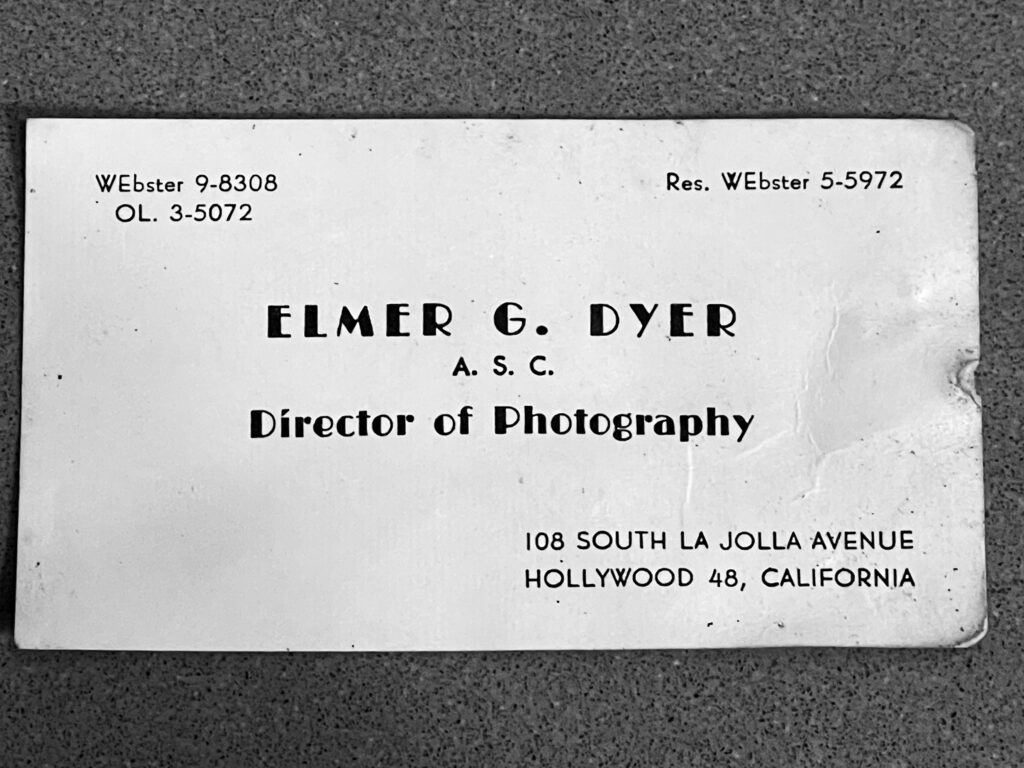
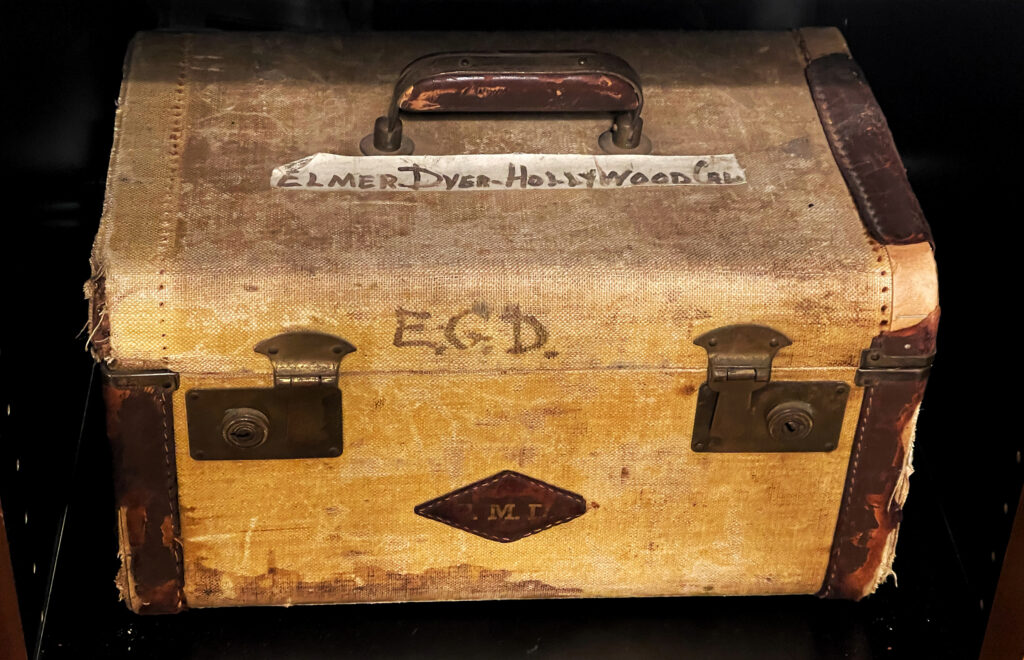
Recently, cinematographer and ASC Museum Curator Steve Gainer acquired a collection of Dyer’s equipment and artifacts. You can see some of them in the accompanying photos, or visit the ASC Clubhouse in Hollywood where they’re now on display.
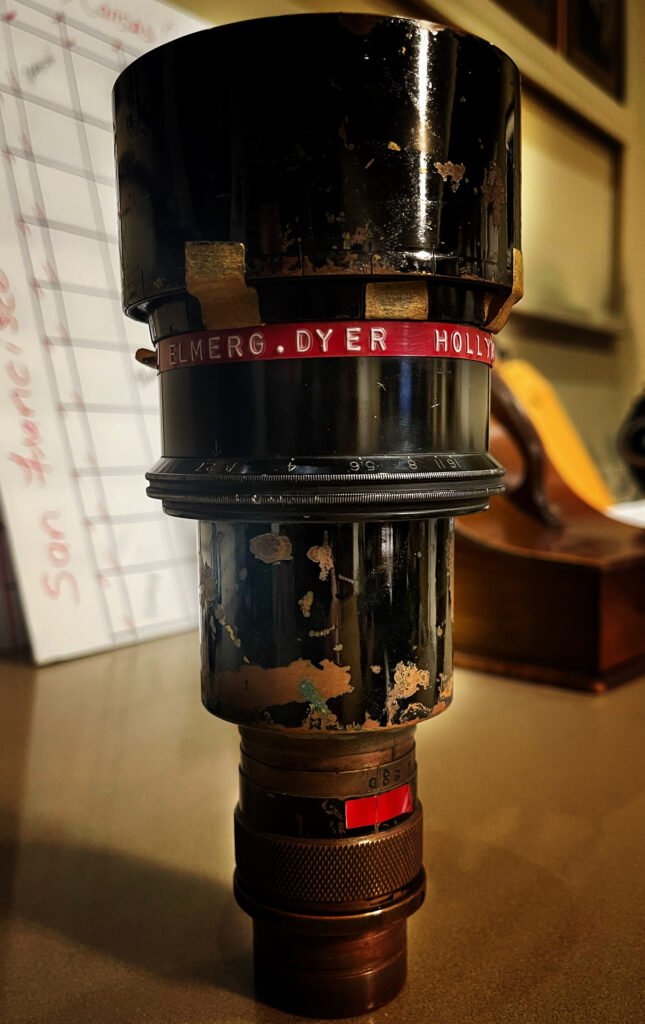
Dyer’s Bausch & Lomb 152mm Raytar f2.7 lens… Who knows how many breathtaking sequences were shot with it?
Hello Richard, I’m fascinated with this period of film making especially
the aerial films. I can’t find a whole lot of information on Elmer Dyer.
I would like to read more about him.
It seems the Academy of Motion Picture Arts and Sciences has his
personal collection of articles written and correspondence.
However none of it is accessible on line.
Ken – One day I’ll look a bit deeper into Dyer’s life and career, then post the results. The Academy’s Herrick Library holds a tremendous archive…
That would be great to hear more about him. Thank you!
I just watched the documentary film about Don Morgan.
I guess he could be considered a modern day Elmer Dyer with his
work from helicopters. He seems to be a very gracious man.
A great friend to have.