
When you think of unheralded studio-era cinematographers, people like Lester White, ASC must certainly come to mind. As part of the work-a-day, lunch-pail brigade that made up the backbone of the industry, his artistry never approached the level of Gregg Toland, ASC, but his output was prolific and was seen by millions of people.
Born in New York City on July 25, 1907, he began as an assistant cameraman at Goldwyn Studios during the early sound era. After contributing to Thornton Freeland’s Whoopee! (1930), he moved to MGM for Sidney Franklin’s Smilin’ Through (1932) and a variety of other feature productions.
His first credit as a full-cinematographer came with 1933’s The Prizefighter and the Lady (W.S. Van Dyke & Howard Hawks). After that, he was in high-gear, shooting a long run of unsung programmers at MGM before transitioning to Republic\Allied Artists where his work turned toward genre films. For the most part, the titles listed on his resumé are as anonymous as his own name: Laughing Boy (1934; W.S. Van Dyke), Calm Yourself (1935; George B. Seitz), We Went to College (1936; Joseph Santley) and The Murder Man (1936; Tim Whelan). Slightly more notable are his several contributions to the Andy Hardy and Dr. Kildare cycles, among them Love Finds Andy Hardy (1938; George B. Seitz) and Calling Dr. Kildare (1939; Harold S. Buquet).
The 1940’s and ’50’s saw White branching into mysteries, war and action pictures, along with some light comedy: A Yank on the Burma Road (1942; George B. Seitz), Miss Annie Rooney (1942; Edwin L. Marin), White Savage (1943; Arthur Lubin), Sherlock Holmes in Washington (1943; Roy William Neill), Blonde Fever (1944; Richard Whorf), The Fuller Brush Man (1948; S. Sylvan Simon), The Good Humor Man (1950; Lloyd Bacon) and the Rock Hudson western, Top Gun (1955; Ray Nazarro).
One of his best‑remembered later titles in cult circles is the creature feature The Monster That Challenged the World (1957; Arnold Laven). Having been fond of it since it scared the hell out of me on TV as a kid, I can attest that White’s straightforward, contrasty black‑and‑white photography supports the procedural tone more than any of its dime-store effects.
Rounding out his career in the ’50’s, he moved into television, shooting episodes of Navy Log, The Millionaire, Crossroads, Boots and Saddles, Rescue 8 and The Rifleman.
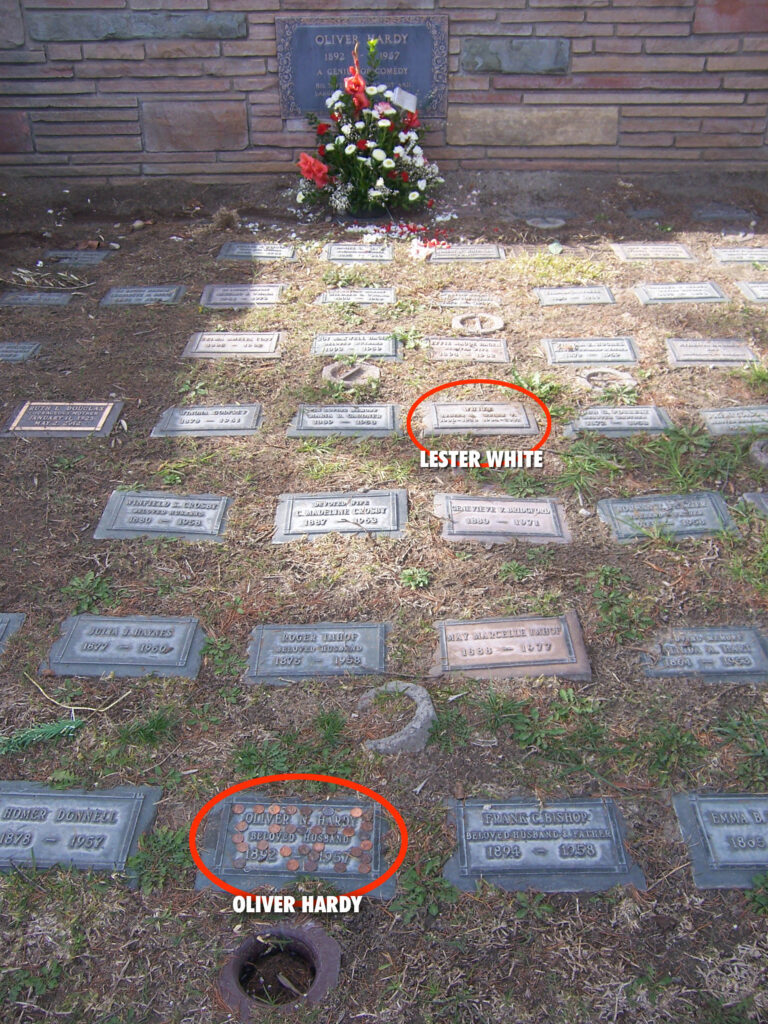
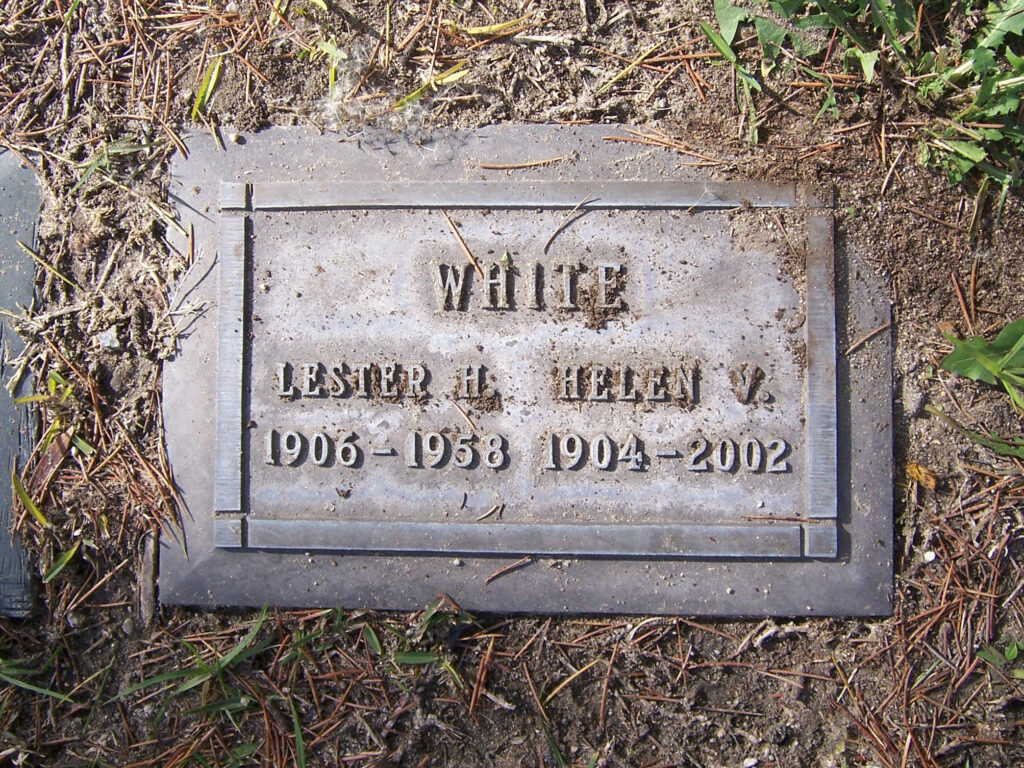
Unfortunately, not much else is known about him. He passed away in Los Angeles on December 4, 1958 and is buried in the Garden of Hope section of the Valhalla Memorial Park in North Hollywood. If you’ll allow me to be morbid for a moment, I’ve provided some photos below:
Thank you for that lovely tribute.